
Bundle Up and Head Out – A Pediatrician’s Plan for a Healthier Hoosier Winter
By Sarah Alexander, MD
As a pediatrician and a mom I’ve learned that winter in our house has a soundtrack: sniffles, coughs and someone asking where their other glove went. Colds are part of childhood, but there’s a lot parents can do to keep a simple cold from turning into something more serious. Here are four steps for you to consider:
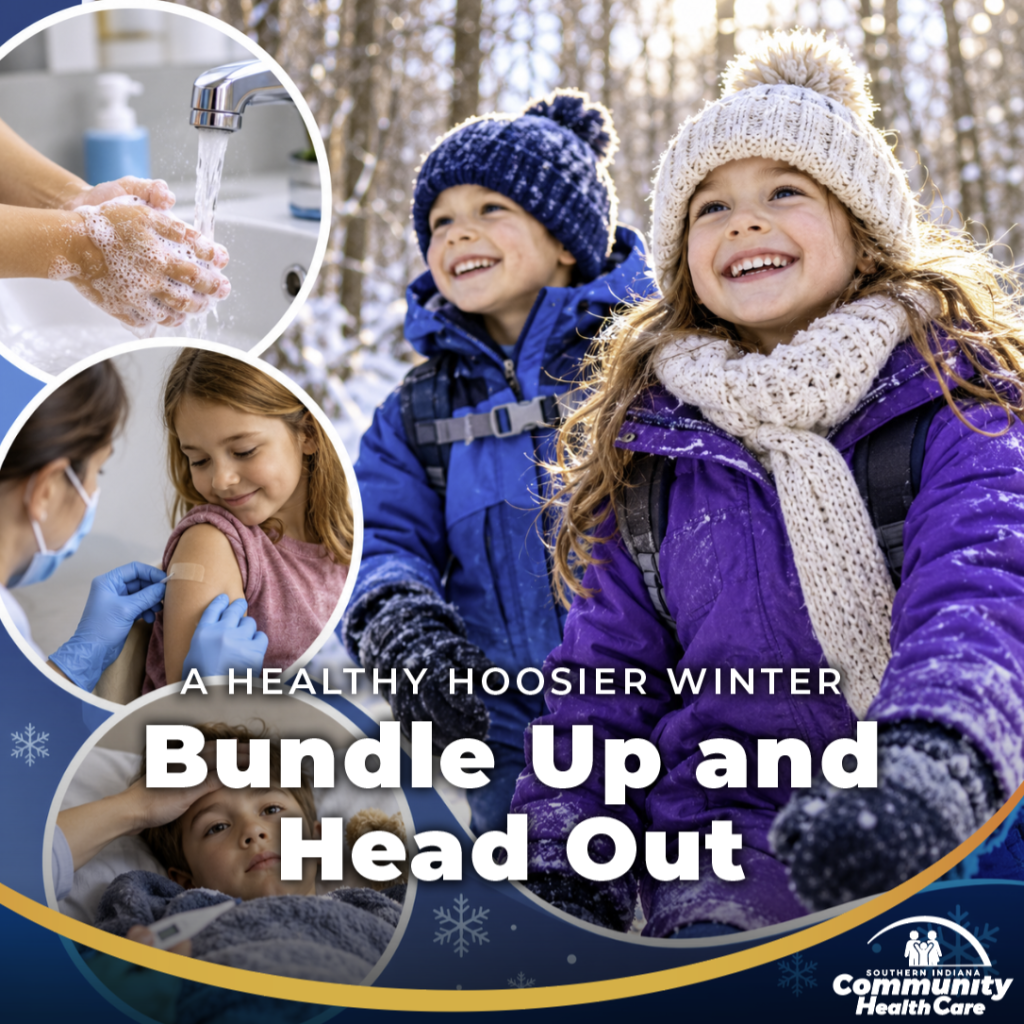
• Get outside every day you can, even when it’s cold. The point? Cold air doesn’t cause colds. Viruses do, and they spread most easily when we’re packed together indoors, breathing the same warm, dry, recycled air. Fresh air and active play give kids a break from the germ swap, and that active play usually means better sleep, better moods, and a place to burn off energy that would otherwise end up on the couch cushions.
• Looking for something besides your backyard? A favorite cure for cabin fever is a trail. Southern Indiana is blessed with places like the Hoosier National Forest and Patoka Lake State Park, and they’re just as beautiful in January as in June. Wherever you go, dress kids in layers, cover heads, hands and feet, swap wet clothes for dry ones, and head in when little ones start shivering. Then enjoy the hot cocoa. You earned it.
• Master the boring basics. Washing hands with soap for 20 seconds (two rounds of singing “Happy Birthday” off-key) is still one of our best defenses. Teach kids to cough and sneeze into their elbows, skip shared cups, and keep sick children home until they’ve been fever-free for 24 hours without medicine. Good sleep, regular meals with fruits and vegetables, and plenty of water help small immune systems do their job.
• Get the shots. It’s not too late. Flu activity is climbing nationally, and the American Academy of Pediatrics recommends this season’s flu vaccine for everyone 6 months and older. It takes about two weeks to build protection, so the best time is now. Plus, the once-dormant measles threat is back in Indiana. The Center for Disease Control (CDC) recommends the measles, mumps, and rubella (MMR) vaccine for infants six months and older. If you have questions, please talk with your provider.
RSV deserves special mention. It’s the leading cause of hospitalization for babies in their first year, and it’s close to my heart: I trained in pediatric lung care, and I’m a mother with young children. Babies can be protected through a vaccine given to Mom late in pregnancy or an antibody shot given to the infant. If you’re expecting or have a baby under 8 months, ask us which option is right for your family.
Know when a cold is more than a cold. Most colds run their course in seven to 10 days with rest, fluids and extra cuddles. But as I mentioned in my last column, call your child’s doctor if you notice:
- Fast or labored breathing, or skin pulling in between the ribs
- Fewer wet diapers (six or less) or other signs of dehydration
- Any fever of 100.4°F or higher in a baby under 3 months
- Fever lasting more than three days
- Symptoms that improve, then suddenly get worse
- Unusual sleepiness or fussiness you can’t soothe
If you’re worried about your baby, trust your gut. You know your child better than anyone, and we’d much rather see a child who turns out fine than miss one who isn’t.
Winter doesn’t have to mean cooped up and sick. Bundle up, get outside, keep shots current, and lean on your pediatrician or provider. Perhaps we’ll cross paths on the trail!
A board-certified pediatrician, Dr. Sarah Alexander serves patients in Crawford and Orange counties. She brings advanced expertise in children’s respiratory health to her clinical practice in English and Paoli, Indiana with Southern Indiana Community Health Care.
Social Media


