
What do you do when your small child gets sick?
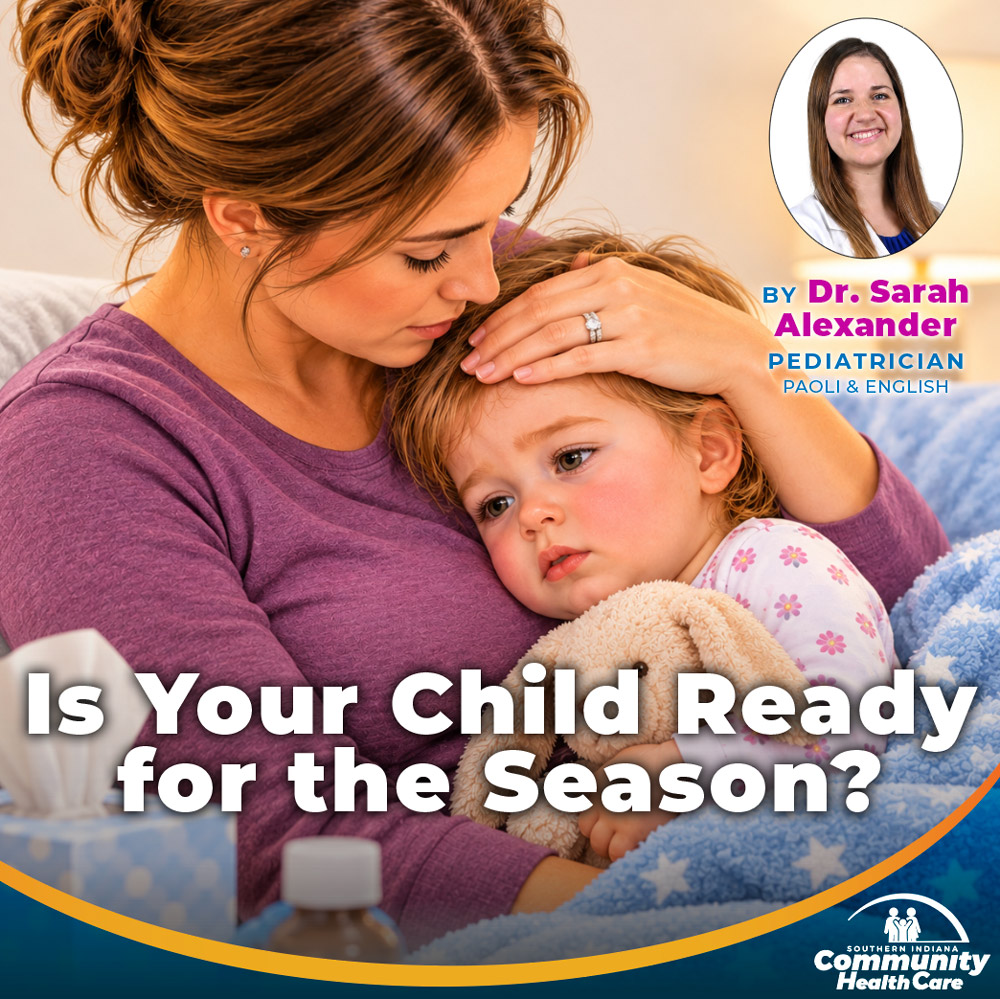
By Sarah Alexander, M.D.
It’s 2 a.m., and the coughing starts again. Anyone who has gotten a baby through cold season knows that sound, and the worry that comes with it. As a pediatrician and a mother of two (soon to be three), I’ve been on both sides of that bedroom door.
Cold and flu season is here, and parents often ask me what to do when their child, especially a baby, catches a cold, gets congested or seems to be coughing too much. The good news is that most colds can be handled at home. The key is knowing what helps, what to avoid, and when to call.
Coughing at night
Coughs often seem worse at night, just when parents are running short on sleep themselves. You may hear your baby coughing, or breathing harder or faster than usual, and wonder if something is wrong.
Since babies can’t tell us how they feel, we have to watch and listen. For the most part, a moderate cough in a baby with a cold is a good thing. It’s how the body clears out congestion.
During the day, gravity is your friend, and mucus drains more easily. When your baby lies down for the night, things can get a little backed up. Even so, always put your baby to sleep flat on their back, alone in the crib, with no pillows, wedges or inclined sleepers. Clearing the nose before bed is the safer way to help.
A typical cold lasts seven to 10 days, and the cough can hang on for two or three weeks after that. That’s normal.
Keep nasal passages clear
Babies breathe mostly through their noses, so a stuffy nose can make eating and sleeping hard. A couple of saline drops in each nostril, followed by gentle suction with a nasal aspirator, can make a big difference. Do it right before feedings and bedtime. A few times a day is plenty, since more than that can irritate the inside of the nose.
A steamy bathroom can also help loosen mucus. Run a hot shower, close the door and sit with your baby in the steam for a few minutes, well away from the hot water.
Skip the cough medicine
I don’t recommend over-the-counter cough and cold medicines. They haven’t been shown to help young children, and they can cause serious side effects.
For children over a year old, a spoonful of honey, alone or in a warm drink with lemon, can soothe a cough or sore throat and may help everyone sleep. Never give honey to a baby under 12 months, not even a taste. It can cause a serious illness called infant botulism.
If you want to be really popular with your toddler or older child, a popsicle soothes a sore throat and helps with fluids (you can make healthy versions yourself).
Keep babies and children hydrated
Many children lose their appetite when they have a cold. That’s okay for a short time, but staying hydrated is critical.
For babies, keep offering the breast or bottle, in smaller amounts more often. Babies under 6 months shouldn’t be given water; breast milk or formula is what they need. Older babies and toddlers can have sips of water throughout the day.
Most babies have about six wet diapers a day. Watch for signs your child isn’t getting enough fluid: fewer wet diapers than usual, a dry or sticky mouth, few or no tears when crying, or a sunken soft spot on top of the head. If your baby hasn’t had a wet diaper in six hours, call your provider.
Other times to call
Children’s breathing is my specialty, so here is what I want parents to watch for. Call your provider right away if your child:
- is breathing fast while resting
- has skin pulling in between or under the ribs with each breath
- has flaring nostrils or makes a grunting sound when breathing
- is too out of breath to eat
- is unusually sleepy, hard to wake, or won’t eat or drink
- has a fever lasting more than three days, or seems to get better and then gets worse
When the nearest emergency room may be a half-hour drive away, your provider’s 24-hour line is a good first call. If you’re worried, it’s always okay to call. I’d much rather see your baby and send you home reassured than have you tough it out. And if you come in, we can show you how to use a nasal aspirator gently and correctly.
When your baby or child gets sick, a little TLC with purpose goes a long way. In my next column, I’ll talk about steps you can take to help keep your child from getting sick in the first place.
A board-certified pediatrician, Dr. Sarah Alexander serves patients in Crawford and Orange counties. She has specialized fellowship training in pediatric pulmonology and brings advanced expertise in children’s respiratory health to her clinical practice in English and Paoli, Indiana.
Social Media


